How 3M increased truck fill rates from 35% to 90% and achieved a 25x return on investment
Executive summary
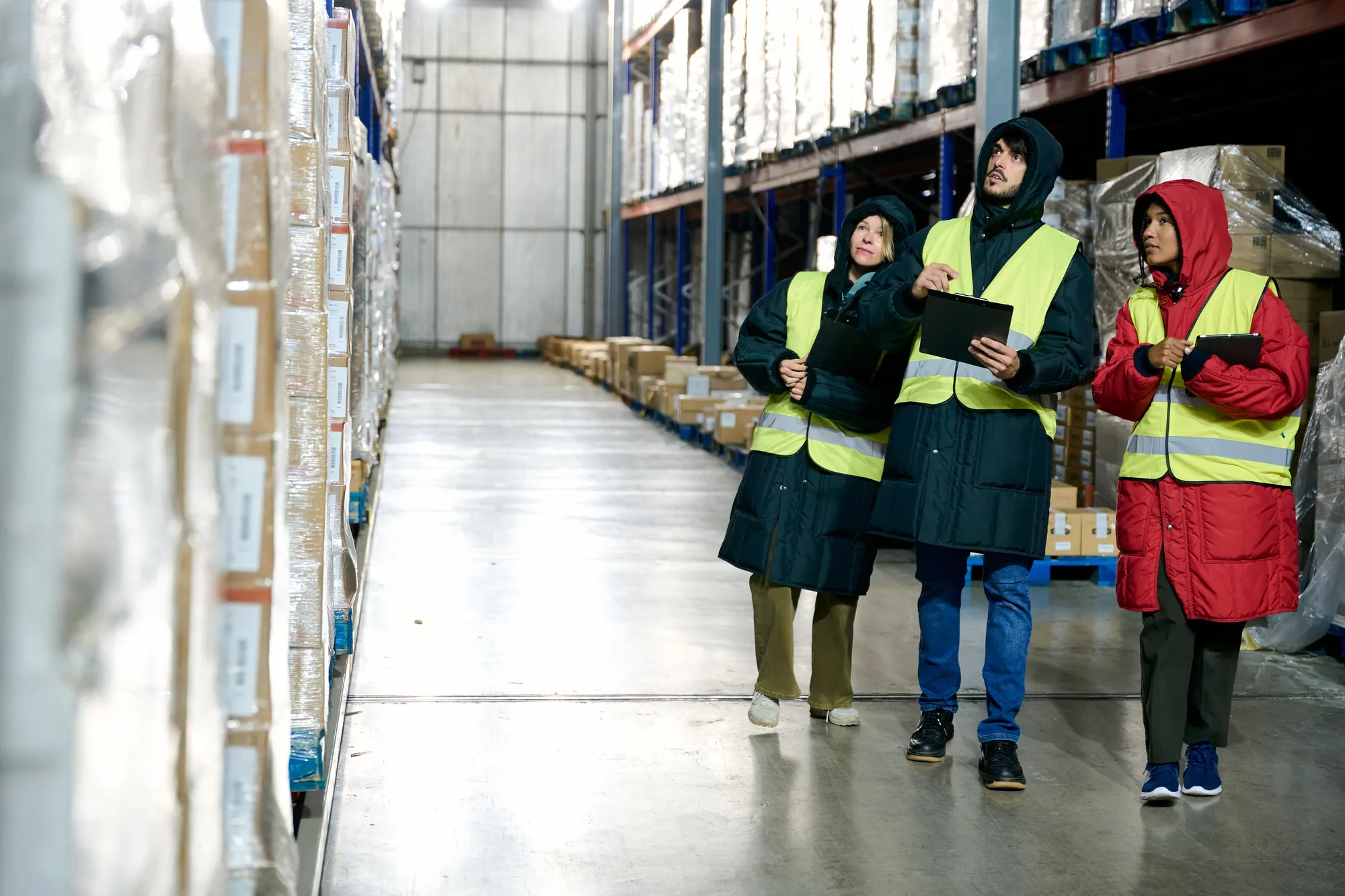
3M EMEA was palletising goods at the factory — one customer-specific pallet per order, non-stackable and non-standard. Trucks ran at 35–45% capacity. Across 30+ countries and multiple 3PL partners, there was no cross-network visibility and no shared performance baseline.
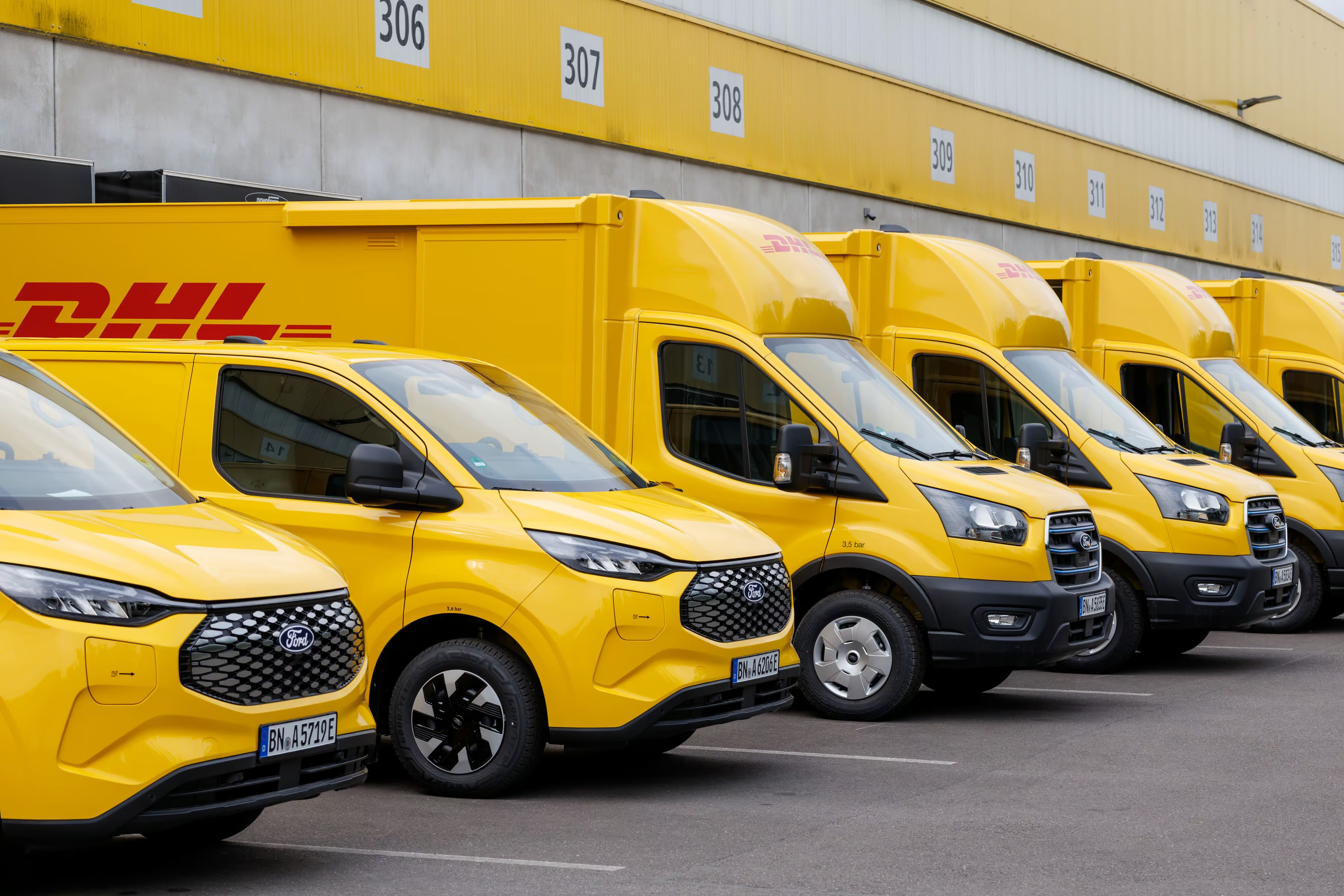
MIXMOVE HUB OS was deployed across cross-docking hubs operated by DHL, DSV, and Gebrüder Weiss throughout EMEA — on top of existing systems, without replacing them. Goods are now consolidated at the parcel level by final destination at the hub, not the factory, enabling full-height mixed pallets and near-full truck loads.
- Truck fill rates lifted from 35–45% to 70–90% — the direct operational improvement
- 35% transport cost reduction — a consequence of fewer trucks moving the same volume
- 50% CO₂ reduction from line-haul transport — a consequence of fewer and fuller trucks
- A 25x annual return on platform investment — the financial outcome of the three gains above.
Customer overview
3M is one of the world’s foremost science-based technology companies, operating in more than 70 countries with approximately 90,000 employees and a portfolio of over 60,000 products spanning healthcare, manufacturing, safety, and consumer markets. A Fortune 500 company and a consistent presence on sustainability indices, 3M’s EMEA logistics operation coordinates the movement of tens of thousands of product lines from multiple manufacturing locations to customers across 30+ countries, through a network of multiple third-party logistics providers working in parallel.
Logistics performance is not just operational for 3M — it is strategic. The scale of the EMEA network means that even a marginal improvement in transport utilisation translates directly into tens of millions of euros in annual savings. The partnership with MIXMOVE — now spanning more than ten years — began with exactly that problem.
A structural inefficiency at the pallet level
3M’s EMEA logistics model had a fundamental structural problem. Because goods were palletised at the factory level — one pallet per customer, assembled at the point of production — the pallets were non-standard, non-stackable, and extremely wasteful of truck space. The consequence: trucks and containers across EMEA were loaded to only 35–45% of capacity on average. Across a network processing millions of shipments per month, the cost and carbon implications were severe and compounding.
Beyond the utilisation problem, 3M had no unified view across its logistics ecosystem. DHL, DSV, and Gebrüder Weiss each operated their own systems. 3M’s network operations team had no real-time picture of what was moving where, which hubs were performing on target, or what was causing service-level variance across regions.
3M evaluated the market and concluded that no existing TMS, WMS, or visibility tool could solve the problem at the required level of complexity. The solution needed to sit above 3M’s existing ERP and the 3PL systems — not replace them — and orchestrate performance across all of them simultaneously.
MIXMOVE HUB OS: deployed across the EMEA hub network
MIXMOVE deployed MIXMOVE HUB OS across the cross-docking hubs operated by DHL, DSV, and Gebrüder Weiss on 3M’s behalf throughout EMEA. Rather than requiring any 3PL partner to replace their existing WMS or TMS, MIXMOVE HUB OS was implemented as an orchestration layer on top of existing infrastructure — connecting via pre-built API integrations and configurable business rules.
At each hub, MIXMOVE HUB OS introduced intelligent cross-docking execution. Goods arriving from multiple 3M factories were received, scanned, and dynamically consolidated at the parcel level by final customer destination — not by factory origin. The result: full-height, mixed-destination pallets loaded into trucks at 70–90% fill, eliminating the structural waste that had defined 3M’s EMEA logistics for years.
Key capabilities deployed through MIXMOVE HUB OS include inbound predictability with real-time advance shipment notification, dynamic lane assignment, automated consolidation and sorting, carrier integration and outbound planning, and digital proof of delivery with full traceability.
Why the fill rate is the root cause — not one of several results
Every result here traces back to one driver. A 90% fill rate is what makes the transport cost reduction, the carbon reduction, and the 25x return on investment possible. Together, they form a causal chain that shows the full scale of the impact.
Key capabilities deployed
All capabilities listed are deployed and delivering results across the EMEA hub network.
Implementation & approach
MIXMOVE’s deployment model is built around a principle that is fundamental for large logistics operators: no rip-and-replace. 3M’s existing ERP remained in place. Each 3PL partner’s WMS and TMS remained in place. MIXMOVE HUB OS was implemented as an orchestration layer connecting to those systems via API, processing inbound data, generating execution logic, and returning event data — without disrupting live operations at any hub.
The deployment engaged three distinct stakeholder layers: 3M’s EMEA logistics and operations leadership (defining network-level consolidation rules and KPI requirements); the IT and operations teams at DHL, DSV, and Gebrüder Weiss (configuring MIXMOVE HUB OS within their hub environments); and MIXMOVE’s implementation specialists (managing integration, testing, and go-live support).
Gebrüder Weiss deployed MIXMOVE HUB OS across its hubs in Austria and Hungary, using the platform’s intelligent reconstruction and sorting capabilities to align local operations with 3M’s EMEA-wide standards. DSV deployed at two Central European hubs — Germany and Denmark — achieving a 12-week go-live at each location.
What the deployment has delivered
- Truck and container fill rates increased from 35–45% to 70–90% — eliminating the structural waste at the centre of 3M EMEA’s logistics cost base
- Hub throughput at DSV Germany and Denmark improved by 30% within 12 weeks of MIXMOVE HUB OS go-live
- Error rates at DSV hubs fell by up to 80%, driven by inbound scanning, automated lane assignment, and digital PoD
- More than 2,000 boxes organised daily at Gebrüder Weiss Austria and Hungary, serving 200 distinct consignees from 2 full truckloads per day
- 35% transport cost reduction across the EMEA network, driven by improved load utilisation and carrier efficiency
- 25x annual return on platform investment, once onboarding was complete.
Customer voice
By using the MIXMOVE software, 3M managed to reduce transport costs by 35% and CO2 emissions by 50%.
What the deployment proves
The 3M EMEA deployment demonstrates something important for any large shipper managing logistics through multiple 3PL partners: a single intelligent execution layer, deployed at the hub, can transform the economics of an entire logistics network — without disrupting the systems and relationships already in place.
For 3M, the ten-year partnership with MIXMOVE has produced a logistics network that is measurably more efficient and more sustainable than when it began. The fill rate transformation that underpins all of the results above has been operating at scale, across 30+ countries and three major 3PL networks, for over a decade.
More stories
Ready to optimise your logistics network?
Turn your logistics network into a competitive advantage. TMS, WMS, ERP vendors, cloud providers and integration specialists that help us connect diverse systems into a single orchestration layer.